The new work culture emerging in Japan due to its aging population and labor shortage.
<!--img--> 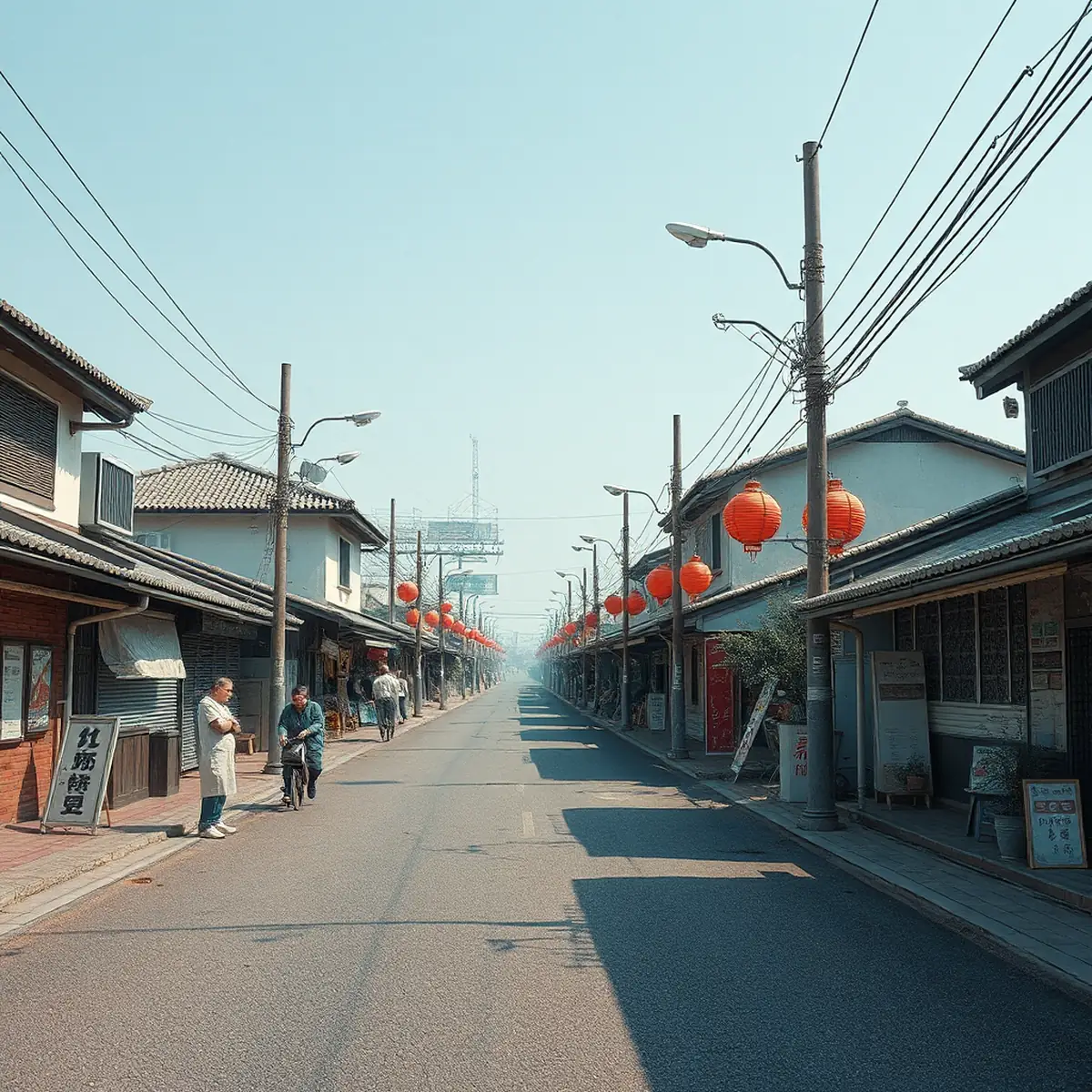
Japan is one of the countries experiencing the fastest rate of aging in the world. As of 2023, people aged 65 and over account for approximately 29% of the total population, which is the highest rate among OECD countries. This demographic shift is not limited to an increase in the elderly population; it has a wide-ranging impact on Japan's economy and society as a whole. One of the most notable changes is the shift in work culture brought about by "labor shortages." This article examines how aging is creating new forms of employment and work patterns in Japan, and discusses the impact these changes are having on society.
---
1. Increasing Elderly Population and Structural Changes in the Labor Market
Japan's aging population is not just a demographic trend; it represents fundamental structural changes in the labor market. Since the 1980s, Japan's economic growth has slowed, causing younger generations to lose competitiveness in the job market. This has led to a phenomenon of long-term employment for middle-aged and older workers, as well as an increase in the number of people over 70 who are employed. The Japanese government is actively promoting "employment extension," legally guaranteeing the possibility of employment up to the age of 70. In fact, as of 2021, there were approximately 630,000 people over the age of 70 employed. This is more than double the number from a decade earlier.
This increase in elderly employment is not simply for financial reasons. Many older people are seeking "activity" rather than just "employment." This stems from a desire to validate their worth and maintain social connections through work. For example, at a large supermarket in Osaka, women in their 70s continue to work as employees after retirement. They form social bonds through "colleagues" rather than "family," which contributes to maintaining their mental health.
This phenomenon represents a shift from the traditional view of "retirement" as a period of rest to one of "extended social participation." Japan is creating a culture where it is important for people to "continue their social roles" rather than simply being removed from the workforce.
---

2. Driving Speed and the Rise of Artificial Intelligence: Creating Customized Jobs
To address labor shortages, Japan is focusing on technological solutions rather than simply increasing the population. "Artificial intelligence (AI)" and "robot technology" are rapidly being adopted across manufacturing and service industries. However, these technologies are not used to compete with humans; instead, they are used to enhance and complement human roles. A prime example is "healthcare robots."
Japan predicts a shortage of approximately 180,000 caregivers by 2030. As a result, several companies are developing caregiver robots that automatically perform tasks such as measuring patients' temperatures and providing exercise guidance. However, robots cannot accurately understand a patient's emotional responses or psychological state, so the role of human caregivers remains essential. This creates "hybrid jobs" where humans and technology coexist, which is gaining attention in Japan.
In addition, some companies operate call centers where "AI chatbots" and humans collaborate. AI handles general customer inquiries, while human agents intervene for complex issues or when dealing with emotions. This collaborative structure complements the limitations of technology while providing human workers with more advanced tasks. This expands the concept of "work" from simple labor to one that involves intelligence and emotion.
---
3. New Forms of Employment: The Spread of "Temporary" and "Freelance" Work
Traditionally, middle-aged and older people in Japanese society relied on "regular employment" for their livelihood. However, more flexible forms of employment are becoming increasingly popular. In particular, "temporary" and "freelance" work have become common employment options for people of all ages, from their 20s to their 50s. According to a 2020 survey, approximately 40% of the Japanese workforce are non-regular employees. This trend has been steadily increasing since the 1990s, reflecting changes in the economic structure and a decrease in dependence on parents.
For example, a technology company in Tokyo actively recruits "tech consultants" who are freelancers over the age of 50. These individuals participate in tasks such as hacking and technical consulting, receiving a guaranteed monthly income while maintaining flexible schedules. This "freedom of career choice" offers new ways of life for older people.
This flexibility is not limited to the elderly. Young people in their 20s also choose "freelance" work to have their value recognized. They place more emphasis on "self-development" and "self-expression" rather than the fixed promotion paths within companies. This shows that Japanese society is gradually changing to respect "self-directed lives."
---
4. Challenges and Anxieties: The Shadow of Flexibility

While these new forms of employment offer positive aspects, they also have a shadow side. In particular, "job insecurity" is a reality for many people. Those who work as temporary or freelance employees do not receive benefits such as pensions, healthcare, and vacations. This can create a vulnerable structure for long-term retirement planning.
Furthermore, as the structure of "human-centered work" shifts to one that collaborates with technology, the roles of some human workers are being reduced. For example, the emergence of AI that can perform coding tasks is threatening the employment of some programmers. In response, the Japanese government is expanding "digital literacy education" and aims to ensure that all citizens have the ability to use digital technology by 2025.
---
Japan's aging population and labor shortages are not just economic problems; they provide an opportunity to redefine the very meaning of "work." The process of finding a new balance between humans and technology, flexibility and stability, productivity and quality of life is still ongoing, but these efforts are gradually taking on a more organized form. This is an important trend that Korean society should also pay attention to.
Japan is moving beyond being just an "aging society" and striving to become an "aging society that works."
<!--enr--> ## Quick Comparison
| Category | Item A: Aging Population and Extended Employment | Item B: Technology-Driven Hybrid Jobs |
|---|---|---|
| Main Drivers | 29% of population aged 65 and above (2023), approx. 630,000 workers aged 70 and older | Labor shortage (180,000 shortfall in caregivers by 2030), growing adoption of AI and robotics |
| Key Shift | Culture shifting toward active aging, stronger societal desire to maintain roles in later life | Human-technology symbiosis, emergence of collaborative structures involving AI chatbots and caregiving robots |
| Employment Type | Long-term non-regular employment, legal guarantees for employment up to age 70 | Expansion of freelance and temporary work, rise in flexible roles such as tech consultants |
| Social Impact | Improved mental health, stronger social bonds through workplace peer networks | Job intelligence enhancement and expansion of emotional roles, higher-level development of human labor |
| Side Effects | Insecure employment, inadequate welfare coverage, vulnerability in old age | Threat of role reduction due to technology, increasing need for digital literacy education |
Frequently Asked Questions (FAQ)
Q1. What is the percentage of Japan's population aged 65 and over? As of 2023, people aged 65 and older make up approximately 29% of Japan’s total population, the highest rate among OECD countries.
Q2. How many people aged 70 and over are employed in Japan? As of 2021, about 630,000 people aged 70 and over were employed in Japan—more than double the number from a decade earlier.
Q3. Can you provide examples of jobs in Japan where humans and technology collaborate? Examples include care robots that measure patients’ body temperature or guide exercise routines, while human caregivers manage emotional responses; and call centers where AI chatbots handle routine inquiries, and human counselors address emotional issues.
Q4. What is the proportion of non-regular employment in Japan? According to a 2020 survey, non-regular workers accounted for about 40% of Japan’s total workforce—a trend that has been steadily increasing since the 1990s.
Related posts

Why has *soju*, a traditional Korean alcoholic beverage, become an "everyday drink" for
Japan's Reality of "Working from Home" and Practical Tips for a Balanced Life: A

Why is Japanese sake (soju) so strong, if it's not actually "alcohol"?
How will the Japanese government's "mandatory remote work" policy, which is set to be
Popular posts
Why has *soju*, a traditional Korean alcoholic beverage, become an "everyday drink" for
Here are 5 practical tips for quickly finding accommodation in Japan.
Japan's Reality of "Working from Home" and Practical Tips for a Balanced Life: A

Comments 0